Sunday, 18 December 2011

Christmas Chicken Breasts Poached in Apple Cider with Chestnuts


Chicken is an excellent choice for Christmas dinner or lunch, especially for those people who may not be big fans of turkey. Chicken can, however, present a similar problem to turkey when cooking for only one or two in that far too much will remain in the form of leftovers, unless an extremely small bird can be obtained. Today's recipe focuses on cooking chicken breasts with a Christmas twist, quoted in the quantities required to serve one person.

Ingredients

Two small chicken breasts (skin on)
6 chestnuts
1 medium carrot
1 Granny Smith apple
Half a medium white onion
1/2 tsp dried thyme
1/2 tsp dried rosemary
1/2 pint fresh chicken stock or broth
1/2 pint apple cider
Sea salt and freshly ground black pepper
1 tbsp vegetable oil
Chopped chives to garnish


Method

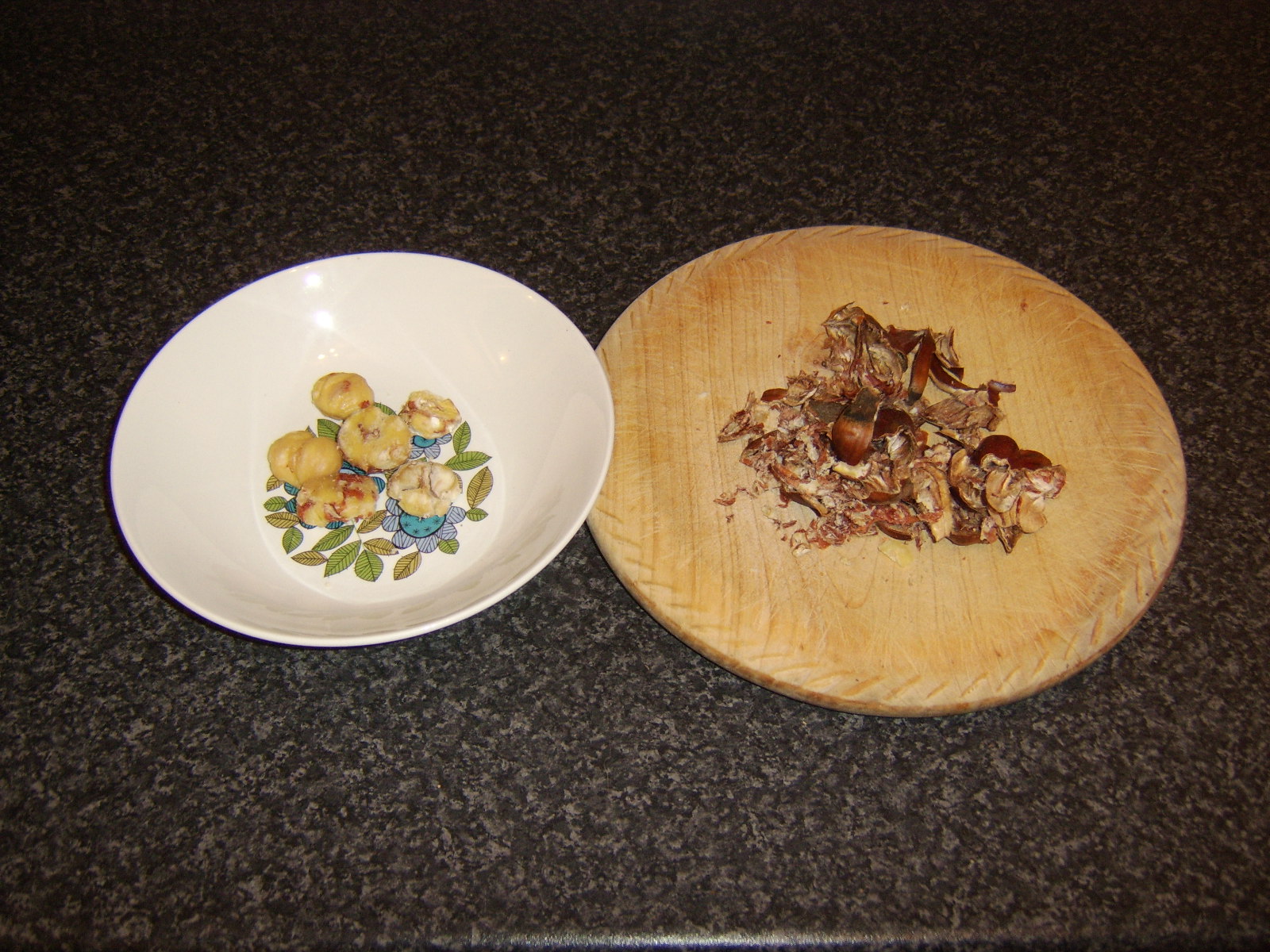
Chestnuts roasting on an open fire are words contained in a popular Christmas song and also represent an extremely tasty way of cooking chestnuts. In this instance, however, the chestnuts are poached. SImply bring a pot of salted water to a boil and make a couple of small cuts in the chestnuts before adding them to the water and simmering for ten minutes. Drain the chestnuts and peel as soon as they are cool enough to handle. Do not let them cool too much or the shells will harden again and make the process nigh on impossible. Cover the chestnuts and set aside.

Put about a tablespoon of vegetable oil in a large frying pan and bring up to heat. Season the chicken breasts with salt and pepper and quickly seal on both sides and the edges. Remove to a plate.


Peel and roughly chop the carrot. Chop the onion in half again. Add them to the pan along with the herbs and stir fry for a couple of minutes.


Return the chicken breasts to the pan, skin side up.


Pour in the chicken stock and the cider. Peel and remove the core from the apple. Roughly chop and add it to the pan. The idea is for the apple to break down and thicken the stock. Turn up the heat until the liquid begins to simmer. Reduce the heat and place the lid on the pan for twenty minutes.


Remove the chicken breasts to a heated plate. Ensure the juices run clear and that they are fully cooked. Cover with foil to rest. Turn up the heat to bring the stock to a rapid boil and add the chestnuts. Reduce for ten minutes and check for seasoning.


Use a slotted spoon to transfer the solids to a serving plate. Slice each chicken breast at an angle in to three and arrange on top.


Spoon a little of the stock over the chicken breasts and garnish with the chopped chives.

If you're looking for a seasonal beer to serve with this dish, why not try to get hold of some chestnut beer? If you live in the UK, you can get this particular brew from your local Morrisons store in the lead up to Christmas.

Saturday, 17 December 2011

Christmas Turkey Casserole with Sage, Onion and Brussels Sprouts


Christmas is but a week away and around the world, people will have their turkeys in their freezers, ready for defrosting in the middle of the week and cooking on the big day. What if you are spending Christmas alone, however, or perhaps only as part of a couple? A whole turkey is unlikely to be practical but turkey is still very much a menu option. This Christmas turkey casserole recipe is as easy as abc and is in the quantities required for one modest serving.


Ingredients

1 6oz turkey breast fillet
1/2 red bell pepper
1/2 medium white onion
5 Brussels sprouts
1 tsp dried sage
1 pint fresh chicken stock
Sea salt and freshly ground black pepper
1 tbsp vegetable oil for sealing turkey meat
Freshly chopped parsley to garnish


Method

You may be wondering why I bought a 6oz piece of turkey breast instead of simply buying diced turkey. The reason is simply that experience has taught me, when I buy turkey meat already diced, it has been cut in to pieces which I deem to be too small. If you choose to buy the turkey already chopped, therefore, try to ensure it is in decent sized pieces of at least approximately one inch.


Put your oven on to preheat to 180C/350F. Chop the turkey breast fillet in to one inch pieces and gently seal in some warmed vegetable oil over a medium heat, stirring frequently with a wooden spoon, until evenly white and sealed. This should only take two or three minutes. Meanwhile, add the chicken stock to a separate pot and bring it up to a simmer. Half the onion half again and remove the seeds from the bell pepper, before slicing it in to strips of around half an inch. Remove any loose or damaged leaves from the Brussels sprouts.


Put the vegetables and the sealed turkey meat in to a deep casserole dish. Season with the dried sage, some sea salt and black pepper.


Pour in the chicken stock and put the lid on the casserole dish before placing it in to the oven for thirty minutes.


When the casserole comes out of the oven, I like to let it rest for ten to fifteen minutes prior to service but this is a matter of choice. It should then be added to a serving plate with a slotted spoon and the roughly chopped parsley added as a final garnish.


Wine is probably the alcoholic beverage of choice most often served with Christmas dinner. In this instance, however, I served this dish with a Christmas novelty beer picked up in my local supermarket. "Rudolph the Red Nosed White Horse," is a beer produced by the White Horse Brewery in Oxfordshire, only for the Christmas market. It was actually very enjoyable and comes in at 4.8% ABV.

Saturday, 10 December 2011

Bell Pepper and Bacon Frittata


Frittata is essentially a substantial type of omelette of Italian origin, very similar to the Spanish dish, tortilla. This frittata is made with bell peppers, bacon and onion as its principal fillings but the different ingredients and combinations of ingredients which can be incorporated are all but endless. This frittata is designed to serve one person but they will frequently be made on a larger scale and sliced in to wedges like pizza, to be served either hot or cold.

One of the greatest benefits of a dish like frittata is that - provided you have eggs - a tasty meal can be made from even the most meagre of other available ingredients. It was in precisely this way that today's recipe came about. On Thursday, a fierce storm blew in from the Atlantic across Scotland, with hurricane force winds uprooting trees, causing damage to property and sending all forms of debris flying haphazardly through the air. Although I normally visit the supermarket every day of the week for fresh ingredients for cooking, Thursday had me less than willing to venture out in to the storm. It was in this way that frittata became the order of the day.

Ingredients

3 large or 4 small eggs
3 rashers of bacon (back bacon is best)
1/2 red bell pepper
1/2 green bell pepper
1 small white onion or two shallots
Tbsp freshly chopped parsley
Sea salt and white pepper
Olive oil for frying


Method

The bacon could be cut in to strips while raw and simply fried in the pan before the vegetables but I honestly believe the overall effect is much better where the bacon is precooked. This bacon was grilled for a couple of minutes each side and set aside on a plate while the remaining ingredients were prepared.


Remove any remaining stem or seeds from the bell pepper halves and cut them in to strips of about half an inch. The onion or shallots should be peeled and moderately finely sliced.


Put about a tablespoon of olive oil in a small, non-stick frying pan of about 8" in diameter. Bring it up to a moderate heat and add the vegetables. Cook for a couple of minutes over a medium heat, stirring them around with a spatula.


Cut the bacon rashers across the way in to half inch strips and add them to the pan with the parsley, continuing to stir around, just to heat through. Break the eggs in to a bowl and season with the salt and pepper. Beat to combine and pour carefully over the vegetable and bacon mix in the pan, trying to ensure an even covering.


Cook on a low to moderate heat for about seven to eight minutes, until you can see that the eggs are almost but not quite completely set. At this stage, place your pan under an extremely hot overhead grill for a couple of minutes to fully set the eggs and complete the cooking process.


Loosen the edges of the frittata with your spatula and slide it on to a serving plate.

Sunday, 27 November 2011

Deep Fried Goujons of Basa with Spicy Tomato Sauce


Basa is a delicious, white fleshed fish, farmed and thus sustainable. It is significantly less expensive than some of the better known species of endangered fish and is becoming extremely popular around the world. One particular problem with basa - at least here in the UK, where it is also called Vietnamese river cobbler - is that although people may well see it in their supermarkets, they don't buy it because they are not sure what it is and are particularly unsure of how to cook it.


It is important when preparing this recipe to prepare the spicy tomato sauce at least a couple of hours in advance. This is so that the varied flavours may fully infuse. If this presents a problem on the night you intend to eat the dish, simply make it the night before, cool and refrigerate. The sauce can and ideally should be served cold.


Ingredients

Sauce (Serves Two)

1 8oz can chopped tomatoes in tomato juice
1 large garlic clove, peeled and grated or finely chopped
1 small red chilli, finely chopped (seeds in)
Generous pinch of white sugar
Sea salt and freshly ground black pepper

Basa Goujons (Per Serving)

1 fresh basa fillet
2 tbsp plain or all purpose flour
A little bit of cold water
Sea salt

Half a head of broccoli per person as an accompaniment
A little sprig of basil may be used to garnish the sauce if desired

Method

Add all the sauce ingredients to a small saucepan and stir well. Heat on a fairly high setting until the sauce begins to simmer. Reduce the heat to maintain a gentle simmer for twenty to twenty-five minutes, stirring frequently, until a thick, smooth sauce is formed. Taste for seasoning and adjust as required. Turn off the heat, place the lid on the saucepan and leave to cool.


Slice the basa fillet in half lengthwise and each half in half again across the way, as shown. Put the flour in to a flat-bottomed bowl and season with salt. Begin pouring cold water in very slowly from a small jug as you whisk with a fork or hand whisk. You want to achieve the consistency of thick cream.

At this stage, break the broccoli in to florets and add it to a pot of boiling, slightly salted water to simmer for eight minutes only, after which time it should be drained for service.


Bring the oil in your deep fryer or deep frying pan up to a fairly high heat. Draw each goujon of basa through the batter one at a time, hold it above the bowl to drain off the excess for a few seconds and carefully lay in the hot oil. Fry for three minutes each side until the batter is beautifully golden.

Remove the basa goujons from the oil and lay them on some kitchen paper to drain. Add the spicy tomato sauce to a ramekin and plate with the broccoli, before laying the goujons alongside. The basil sprig should garnish the spicy tomato sauce.

Thursday, 24 November 2011

Irish Stew: Simple, Rustic and Delicious


Irish stew is a fabulous one pot recipe which consists chiefly of a simple combination of lamb chops and root vegetables. It is incredibly easy to prepare and delicious beyond belief. There is very little hands on cooking involved and it is mostly a case of getting the right ingredients in to the pot and knowing for how long to cook them.


This recipe is a little unusual in that it is designed for three people. How often do you see recipes for three published online or included in cookbooks? It is also unusual in that I had to make it in a friend's kitchen, using all his utensils and cooking equipment. Just as well he was on hand to tell me where knives and other utensils were kept or total disaster could have ensued! The reason was simply that three of us were meeting up to sort out some fishing tackle and tie up some lures for a trip this weekend and I got the job of firstly cooking us a meal...

Ingredients

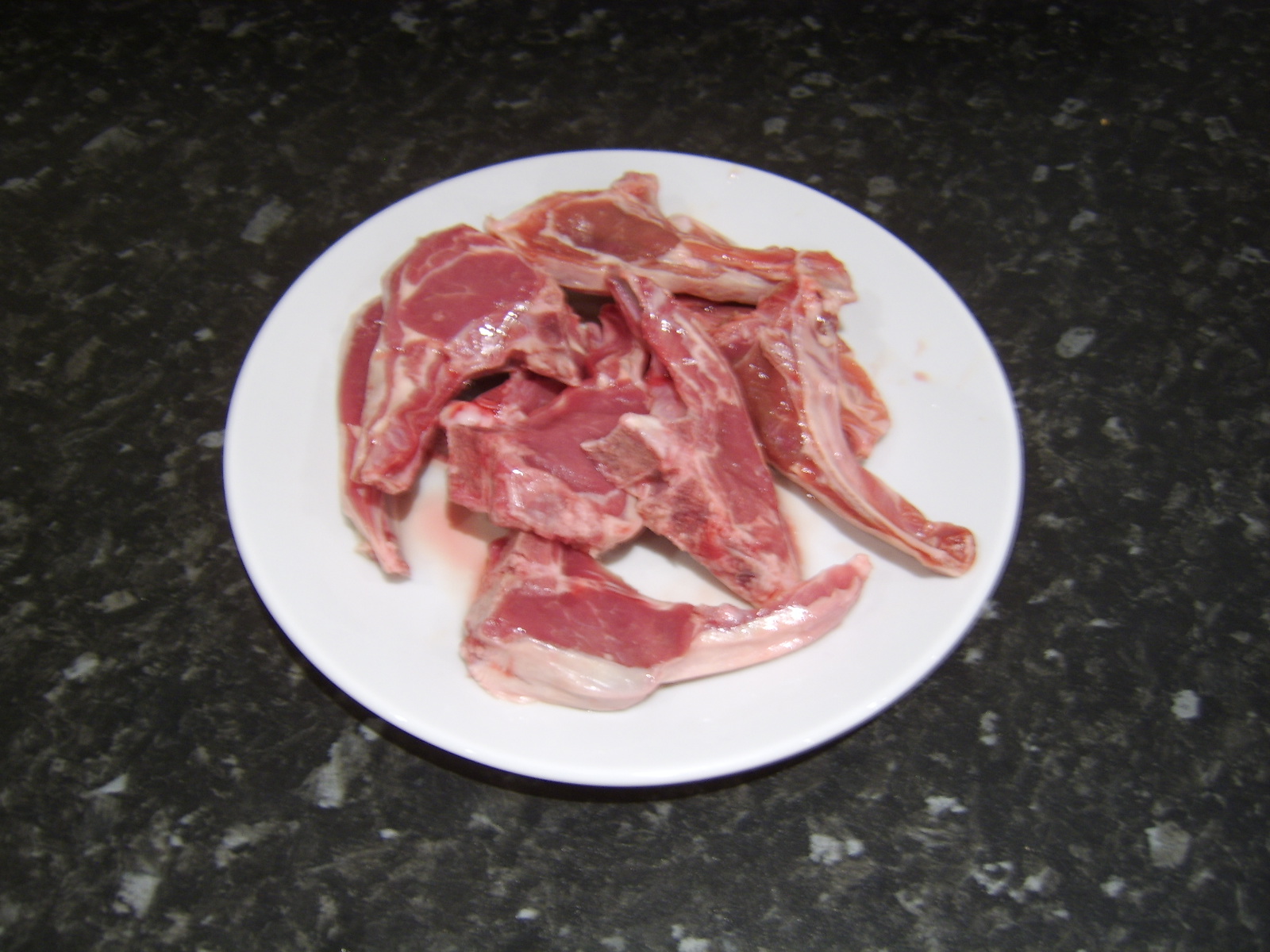
9 lamb chops (loin chops, bone in)
4 medium carrots
2 large white onions
6 medium to large white potatoes
2 pints of fresh lamb stock (chicken stock if lamb is unavailable)
2oz butter
2 tbsp vegetable or sunflower oil
1 sprig of fresh mint (around a dozen medium leaves), plus three small sprigs to garnish
Sea salt and freshly ground black pepper


This Irish stew was made in a cast iron cooking pot, which not only reduces the cooking time, it seems to lock the flavours in to the dish. If you do not have such a pot and do like making stews, it is likely you would find this a wonderful purchase, sure to last you a great many years if not in fact a lifetime. 

Method

Put your oven on to preheat to 350F/180C/Gas Mark 4.

Top, tail and scrape your carrots. Peel your onions and potatoes. Quarter the onions and chop the carrots and potatoes in to bite sized pieces. Remember it is a rustic dish and also that the vegetables should retain their form and shape when cooked.


Put the butter and the vegetable oil in to the cast iron pot and on to a gentle heat to melt the butter. Lay the chops in the pot and turn up the heat. Season with salt and pepper. Brown the lamb chops by frying them for about three minutes on each side and remove them to a plate.


Add the carrot and onion to the pot and sautee for around four to five minutes. Put the lamb chops back in to the pot and carefully mix them with the carrot and onion.


Pour the lamb stock in to the pot and turn up the heat until it starts to simmer. Lay the potato pieces carefully across the top of the other ingredients but do not stir any further. The potatoes are going to mostly steam on top of the dish. Season again with salt and pepper.


Put the lid on the pot and place it in to the oven for one hour. This should see the potatoes perfectly softened.


Remove the dish from the oven and (being very careful of escaping steam) take the lid off before scattering the roughly torn mint leaves over the top of the potatoes. Replace the lid and leave to rest for fifteen minutes. Ladle on to plates and serve immediately, garnished with the small mint sprigs.

Sunday, 6 November 2011

Quail and Herb Buttered Steak with Chips and Braised Savoy Cabbage


Steak and chips is a classic and delicious combination but it can be just a touch predictable. This recipe for steak and chips is spiced up by the addition of braised Savoy cabbage and onion but particularly by a small amount of quail and herb butter. Quail are a very small game bird and this butter is made simply by laying some cooked and cooled quail meat in the base of a small ramekin, covering it with freshly chopped parsley and filling the ramekin up with melted butter before it is placed in the fridge to fully set.


Ingredients per Person

1 6oz beef steak
3 or 4 leaves of Savoy cabbage
1/2 small white onion
1/2 oz quail and herb butter
Olive oil for frying and braising
Sea salt and freshly ground black pepper
Homemade chips to serve

Method


When the chips are just about ready for their final frying, it is time to cook the steak. You will need to put an ovenproof plate in to a low oven to preheat. This will be used for resting the cooked steak. Bring some olive oil up to a high heat in a frying pan. Season the steak well on both sides with sea salt and black pepper. The cooking time for the steak will vary depending upon how you like your steak and the thickness of your steak. This three-quarter inch steak was fried for three minutes each side on a very high heat for medium rare.


Remove the steak from the pan to the heated plate and cover with foil to rest. Start the final frying of your chips.


Shred the cabbage leaves and finely slice the onion. Bring some more olive oil up to heat in a clean frying pan, add the cabbage and onion and season with sea salt and pepper. Sautee for three to four minutes.


Plate the steak and lay the chips, Savoy cabbage and onion alongside. Put the quail and herb butter on top of the steak and serve immediately.

Friday, 4 November 2011

Scottish Venison and Root Vegetable Winter Warmer Stew


Venison is a delicious eating meat, provided it is cooked in an appropriate fashion. A very lean meat, venison requires long, slow cooking, if it is not to be served tough and unpalatable and one of the best ways to prepare it in this way is in a hearty, winter warmer of a stew. The venison in this recipe is from Scottish red deer and the quantites make for two large portions.


Ingredients

1/2lb diced venison
2 tbsp flour
3 tbsp olive oil
2 medium onions
2 pints fresh beef stock
2 pints of water
4 small carrots
1 small swede (rutabaga)
Stem only of one leek
Sea salt and freshly ground black pepper
Fresh parsley or other fresh herb to garnish


Method

Put the flour in to a bowl and season. Pour the olive oil in to a large pot and gently heat. Stir the venison pieces briefly in the flour before transferring them to the heated oil. Brown and seal over a low heat. This should take three to four minutes.


Peel the onions, half them and finely slice. Add them to the browned venison and stir for a further couple of minutes.


Pour the beef stock and the water in to the pot. You could use all beef stock but it's not necessary as the liquid will be well reduced to capture the flavours. Bring to a simmer and cook for one and a half hours, stirring occasionally to prevent sticking to the bottom of the pot. Do note that it may at first seem you have an excess of liquid but resist the temptation to reduce the quantity. You will need every drop by the time it has cooked down and the vegetables have later been added.


When the one and a half hours is almost up, it is time to prepare your root vegetables for the stew. Peel the swede/rutabaga and chop it in to one inch chunks. Peel or scrape the carrot and chop it in to similar sized pieces. The leek should be washed and sliced in to quarter inch thick discs.


Add the vegetables to the stewing venison and stir well. The liquid level should be okay at this stage but you are now going to return it to a simmer for a further hour. Stir frequently and top up with a little bit of boiling water if required.


Taste the stew for seasoning, ladle in to bowls, garnish with freshly chopped parsley and serve immediately with some warm, crusty bread.