Saturday, 28 May 2016

Ostrich Burgers with Pineapple Salsa

Ostrich burgers with pineapple salsa and spicy stuffed baked potato

I came across these ostrich burgers quite unexpectedly a few nights back in my local supermarket and decided they were something I absolutely had to try. I have bought ostrich meat on several occasions previously and come up with a variety of recipes and serving suggestions but this was the first time I had seen these burgers. A quick pause for thought saw me decide to prepare a pineapple salsa as a serving accompaniment and a nice and spicy stuffed baked potato to plate alongside as the starch element of the dish.

Skewered and pierced potato

Ingredients (Serves 1)

1 medium to large baking potato
1 pineapple ring (canned in own juice), finely chopped
2 teaspoons finely chopped red onion
2 small red chillies (seeded and finely diced)
1 garlic clove (peeled and grated)
1 tablespoon extra virgin olive oil
Pinch of dried basil
Salt and pepper
2 ostrich burgers
Vegetable oil for frying
1 ounce (1/4 stick) butter

Potato wrapped in foil ready to be baked

Directions

Start your oven pre-heating to 220C/450F/Gas Mark 8.

The potato can be baked any way you choose but the way I like to bake a potato is by firstly inserting a metal skewer right through the middle lengthways. The heat conducted through the centre of the potato helps to make the inside extra soft and fluffy. The potato must also be pierced several times with the tines of a fork to prevent accumulating steam causing the skin to burst. I also like to wrap the potato loosely in foil to help protect the skin during cooking.

Sit the potato on a roasting tray and bake for an initial one and a quarter hours.

Pineapple salsa principal ingredients

Preparing the salsa as soon as the potato is in the oven allows the various flavours that little bit of extra time to infuse and makes for much better results at the time of service.

Pineapple salsa ingredients ready for combining

Put the pineapple, one of the chopped chillies, one teaspoon of the chopped red onion and the grated garlic clove in to a small stone or glass bowl. Season with salt, pepper and the dried basil. Drizzle in the extra virgin olive oil and stir well. Cover with plastic wrap and refrigerate until required.

Baked potato is cut in half

When the baking potato comes out of the oven it will of course be incredibly hot so great care, using oven gloves all the way through, is required for the next stage in the procedure.

Start by unwrapping and discarding the foil, being wary of escaping steam. The metal skewer should easily pull free from the softened flesh. Cut the potato in half lengthways with a very sharp knife.

Flesh is scooped out of baked potato halves

Use a teaspoon to carefully scoop the flesh from the centre outwards of the potato halves, leaving shells around half an inch thick. Put the scooped out flesh in to a small bowl.

Red onion and chilli are added to baked potato flesh

Add the butter to the potato flesh and mash well with a fork. Stir through the remaining red onion and red chilli, seasoning with salt and pepper.

Stuffed baked potato halves

Divide the mash combination between the two potato shells and return to the baking tray and the oven for fifteen more minutes.

Ostrich burgers

The cooking instructions for these ostrich burgers were detailed on the pack and such instructions should ideally be followed where provided.

Starting to fry ostrich burgers

The burgers were required to be shallow fried in a little oil over a low to medium heat for ten minutes. They should be turned frequently with a spatula.

Ostrich burgers and spicy stuffed baked potato halves

Plate the potato halves on opposite sides of a square plate and lay the burgers in between. Spoon the salsa on to the burgers and serve immediately.

Cutting in to spicy stuffed baked potato half

Wednesday, 18 May 2016

Sea Bass with Roasted Vegetables Pasta

Pan fried sea bass fillet served on a bed of pasta and mixed roasted veg

Sea bass is a naturally delicious eating fish so I always like to cook and serve it in a way that ensures those natural flavours are preserved and not masked. This simple creation not only sees sea bass served and enjoyed in precisely such a fashion, it is also an extremely nourishing and healthy meal.

Ingredients (Serves 1)

12 ounce foil tray of mixed roasting vegetables
Olive oil
Salt and pepper
Pinch of dried oregano
Pinch of dried basil
1 coffee mug of dried fusilli pasta spirals
6 ounce sea bass fillet (skin on)
2 tablespoons plain (all purpose) flour
Vegetable oil for frying
1 tablespoon freshly chopped parsley plus extra to garnish

Seasoning and oiling vegetables for roasting

Directions

Start your oven preheating to 220C/450F/Gas Mark 8.

Season the roasting vegetables in their tray with salt and pepper as well as the dried basil and oregano. Drizzle with olive oil and mix carefully with a wooden spoon. Cook in the hot oven for thirty minutes.

Measuring out fusilli pasta for boiling

When the vegetables have been in the oven for about fifteen minutes, put a large pot of heavily salted water on to reach a rolling bowl. Measure out the pasta. I find that using a coffee mug gives me the perfect portion for one person but you can use more or less if you wish.

Cooking pasta in boiling salted water

When the water is boiling, carefully add the pasta and adjust the heat under the pot to maintain a moderate simmer for eight to ten minutes.

Fresh sea bass fillet

If your sea bass fillet has been in the fridge, take it out to let it come part of the way up to room temperature.

Pasta is drained through a colander

Drain the pasta and leave it for a few minutes to steam off and dry out.

Sea bass fillet is floured for frying

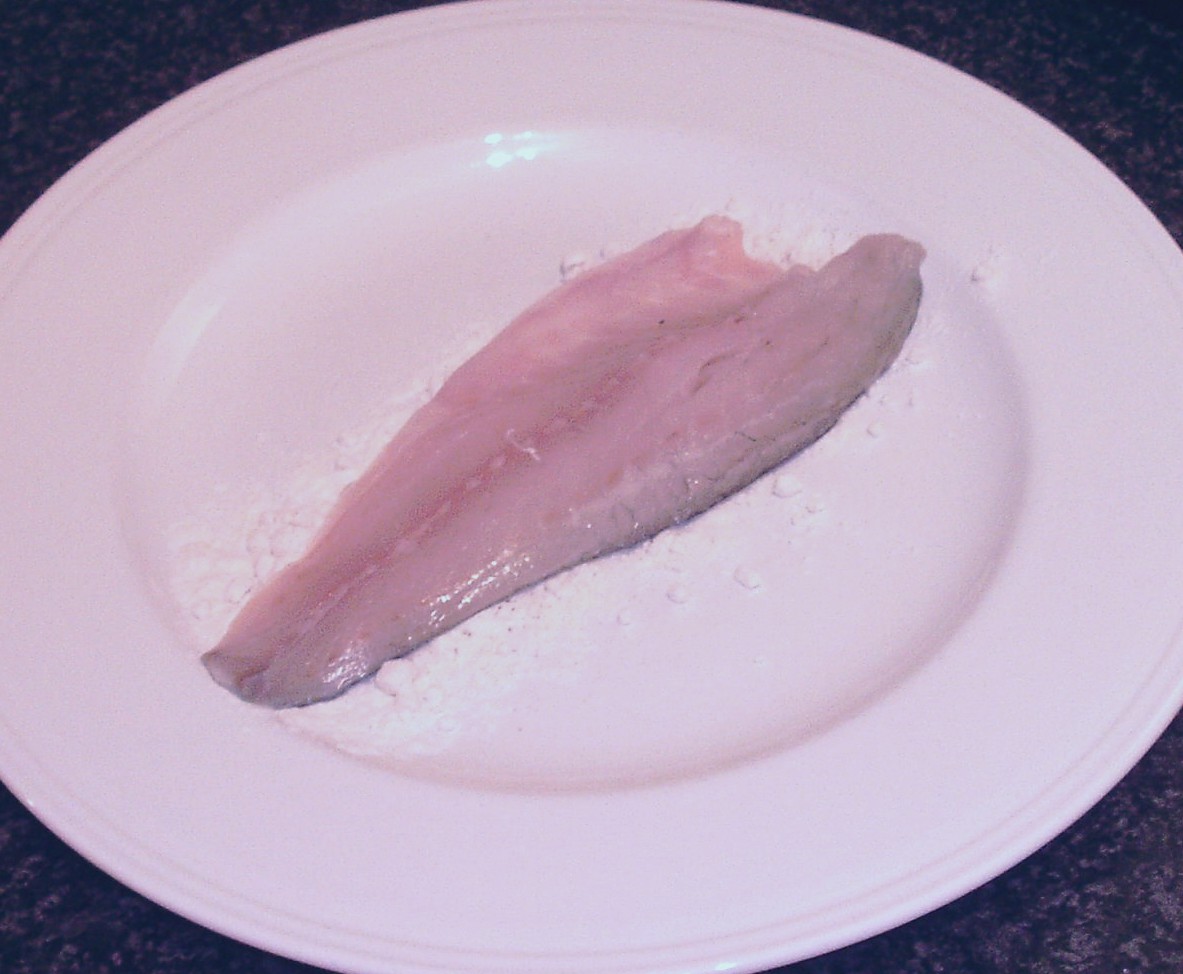
Scatter the flour on a large plate and season with plenty of salt and pepper. Pat the sea bass fillet in the flour on its skin side only. Gently shake to remove any excess.

Sea bass is fried firstly on its floured skin side

Pour a little vegetable oil in to a non-stick frying pan and bring it up to a medium to high heat. Lay the fish fillet in skin side down. Season the flesh side with salt and pepper. Reduce the heat slightly and fry for around three minutes until you can see the flesh colour changing to show the fillet is cooked almost all the way through.

Sea bass fillet completes frying on its flesh side

Reduce the heat to minimum and turn the sea bass on to its flesh side for one minute to complete cooking.

Combining pasta with roasted vegetables

Return the pasta to the empty cooking pot. Add the roasted vegetables and the tablespoon of parsley. Stir to combine with a wooden spoon.

Pasta and veg bed for sea bass

Spoon the pasta and vegetable combination in to a suitably shaped deep dish.

Sea bass fillet is laid on pasta and vegetables bed

Lift the sea bass fillet from the pan on to the bed of pasta and vegetables. Garnish with the last of the parsley.

Skin is peeled from sea bass fillet

The skin should be beautifully crisp on the sea bass fillet and should easily pull away from the flesh in one clean piece.

Tucking in to fried sea bass fillet

Wednesday, 11 May 2016

Grilled Tuna with Stuffed Baked Potato

Sliced tuna fillet with creamy stuffed baked potatoes and chickpeas

I love fresh tuna but tend perhaps to serve it most often with the likes of spicy salsa or a simple salad. On this occasion, I not only fancied a more substantial meal, I wanted to try out this new idea I had for making stuffed baked potatoes. The potato idea worked even better than I had expected and the combination equally proved a winner.

Potato is pierced and skewered prior to being baked

Ingredients (Serves 1)

1 large baking suitable potato
1 small egg
1 tablespoon freshly chopped parsley for potato stuffing and 1 teaspoon for chickpeas
Salt and white pepper
Small 6 ounce can chickpeas in water
6 ounce fresh tuna loin fillet
Vegetable oil
Black pepper

Potato is wrapped in foil for baking

Directions

Start your oven preheating to 450F/220C/Gas Mark 8.

Take a metal skewer and force it through the centre of the potato, length ways. Pierce the potato a few times with the tines of a fork to allow steam to escape during baking. Wrap the potato loosely in some tinfoil to protect the skin from the heat and lay the package on a roasting tray. Place it in to your oven for one and a quarter hours.

Baked potato is unwrapped

Take the tray containing the baked potato from the oven and with your oven gloves, lift the potato parcel to a chopping board. Continuing to wear your oven gloves, carefully unwrap the foil, being aware that a lot of hot steam is likely to escape.

Skewer is removed from baked potato

The skewer should easily be able to be pulled cleanly free.

Baked potato is cut in half

You can either continue to use your gloves to hold the potato with one hand or do what I did and use several sheets of kitchen paper folded over several times while you cut the potato in half lengthways.

Flesh is scooped from potato halves with spoon

Sit the halves one at a time in the palm of your (still protected!) hand. Take a teaspoon and carefully spoon most of the flesh out and in to a bowl, leaving a core shell around half an inch (just over a centimetre) thick.

Potato flesh is added to mixing bowl with egg and parsley

Break the egg in to the bowl with the potato flesh and add the tablespoon of chopped parsley. Season with some salt and white pepper. You can use black pepper here if you wish but you may find some black specks spoiling the presentation of your served dish.

Potato stuffing ingredients are combined with a fork

A fork is best used to carefully combine all the filling ingredients together as you essentially have to mash the potato flesh.

Potatoes are carefully stuffed for further baking

Divide the filling between the two potato shell casings with a spoon. Lift them carefully back on to your roasting tray and put the tray back in to the oven for fifteen to twenty more minutes.

Chickpeas are gently heated

I drained the chickpeas through a colander at my sink and rinsed them under running cold water. This gets rid of all the chemical preservatives and impurities. I then added them to a pot of cold, slightly salted water and brought the water to a simmer for two or three minutes just to heat them through.

Starting to fry tuna loin

Bring your cast iron grill or griddle pan up to a smoking hot heat. This will take a few minutes. Oil the tuna fillet all over using a pastry brush and lightly season with salt and pepper. Lay the fillet carefully in to the hot pan and cook for two minutes.

Tuna fillet is turned in pan

Turn the tuna fillet with cooking tongs and cook for two minutes on the second side. Note that the tuna fillet should be left pink in the middle to avoid it drying out and becoming unpalatable.

Parsley is added to drained chickpeas

Drain the chickpeas through a colander at your sink and return them to the empty pot. Stir through the teaspoon of parsley.

Grilled tuna fillet is rested

Lift the tuna steak to a small plate or flat bottomed bowl and let it rest for a couple of minutes.

Stuffed and baked potato halves are plated

Take the potato halves from the oven and lift them to your serving plate with a spatula.

Tuna is sliced and added to serving plate

Slice the tuna fairly thickly across the grain on a chopping board with a very sharp knife. Arrange the slices between the potato halves.

Cutting in to soft and fluffy stuffed potato

Spoon the chickpeas around the tuna and potato halves and serve immediately.

Monday, 7 March 2016

Griddled Tuna Salad with Bruschetta

Griddled/grilled tuna fillet slices with a simple salad and bruschetta

This is a super quick to make as well as delicious and healthy meal, perfect for a weeknight when you're perhaps tired and can't face spending a great deal of time in the kitchen. It's ready to eat from starting the prep to finish in an absolute maximum of fifteen minutes.

Ingredients (Serves 1)

6 ounce, 1 inch thick tuna loin steak
Vegetable or sunflower oil
Salt and pepper
1 tablespoon extra virgin olive oil, plus extra for drizzling bruschetta
1 teaspoon fresh lemon juice
2 large garlic cloves, 1 for salad and 1 for bruschetta
Generous handful of mixed supermarket green leaf salad
1 cheesy bread roll

Starting to griddle oiled tuna fillet

Directions

Bring a ridged griddle/grill pan up to a smoking hot heat. This will take around three to four minutes. While the pan is heating up, oil the tuna steak all over. A pastry brush is perfect for performing this task. Season the fillet lightly with salt and pepper. Lay the fillet carefully in the pan to fry for an initial three minutes.

Mixed supermarket salad

This supermarket salad was a mixture of different green leaves, cucumber, red bell pepper slices and sweetcorn. You really can use however whatever salad mix you prefer.

Tuna fillet is turned in griddle pan

Turn the tuna fillet with cooking tongs to fry for three minutes on the second side.

Salad is gently stirred through dressing

Mix the tablespoon of olive oil and the lemon juice in a large bowl. Grate in the peeled second garlic clove, season with salt and pepper and stir again. Add the salad leaves and stir fold or toss through the simple dressing.

Griddled tuna fillet is rested

Lift the tuna fillet to a chopping board and leave it to rest for a few minutes while you prepare the bruschetta.

Cheesy bread roll

This is roll was made with cheese and had extra cheese toasted on the top but you can use a plain bread roll if you prefer. Cut in half horizontally and toast lightly on both sides.

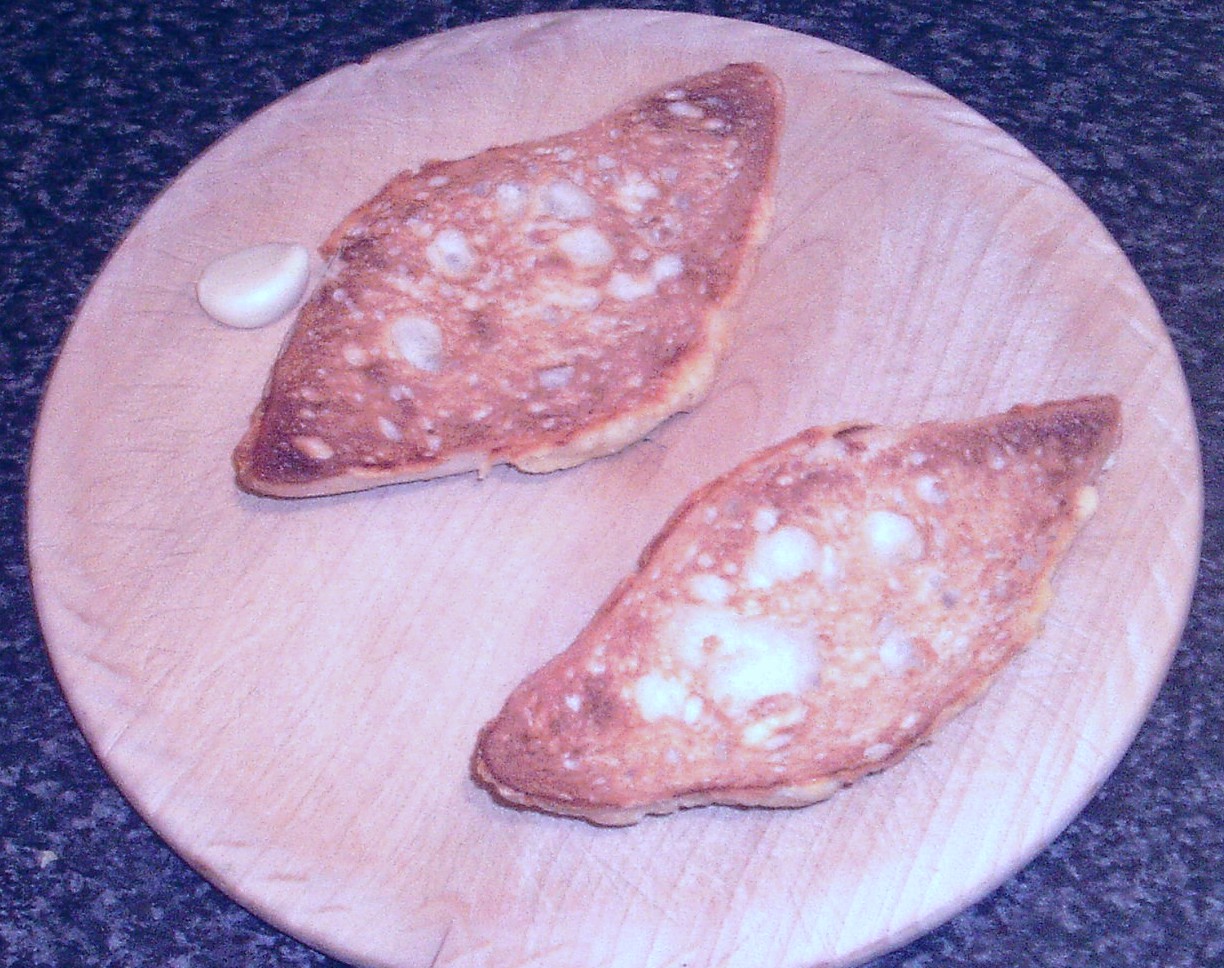
Toasted roll halves and garlic clove

Peel the second garlic clove and lightly crush. Rub it over the cut sides of the hot toasted rolls. Drizzle with a little bit of extra virgin olive oil and season with salt and pepper.

Salad and bruschetta are plated

Arrange the salad in the form of a bed for the tuna on a serving plate. Lay a slice of bruschetta on either side.

Tucking in to tuna salad with bruschetta

Slice the tuna steak across the grain with a cleaver or very sharp knife. Lay the slices attractively on the salad bed and serve immediately.